Operator Syndrome and ADHD: What Veterans Need to Know
- Roxx Farron
- Jun 14, 2025
- 3 min read


Operator Syndrome (OS) is a term that describes a group of issues affecting many special operations veterans. It includes things like memory problems, sleep issues, depression, chronic pain, emotional instability, substance use, and feeling completely burned out. Most people assume it's just from stress, combat, and repeated head injuries. And yeah—that’s a big part of it. But there’s another piece of the puzzle almost no one is talking about: undiagnosed ADHD.
🧩 What Is Operator Syndrome?
If you served in special operations or a high-intensity unit, your brain and body went through hell. Over time, you may have started noticing things like:
Trouble focusing or remembering
Mood swings, anxiety, or feeling emotionally numb
Sleep that doesn’t recharge you
Chronic pain or fatigue
Problems at home, especially in relationships
Feeling like a shell of the person you used to be
This cluster of symptoms is what researchers are calling Operator Syndrome. It’s real. And it’s common.
🧩 What Is ADHD — And Why Does It Matter?
ADHD isn’t just a childhood problem. Many adults have it and don’t even know. For veterans, it often hides under other labels like PTSD, depression, or “anger issues.” ADHD can cause:
Trouble with attention, focus, and task-switching
Being impulsive or easily distracted
Getting overwhelmed emotionally
Feeling like your brain is always moving or stuck
Issues in relationships or at work
Sound familiar? Here's the problem:
⚠️ If Treatment for PTSD Isn’t Working...
It won’t work for anyone who has undiagnosed ADHD. You HAVE to treat the ADHD first for the PTSD treatment to actually work. Not every veteran with OS has ADHD—but for the ones who do, this information could change everything. This is how you stop spinning your wheels and finally get treatment that works.
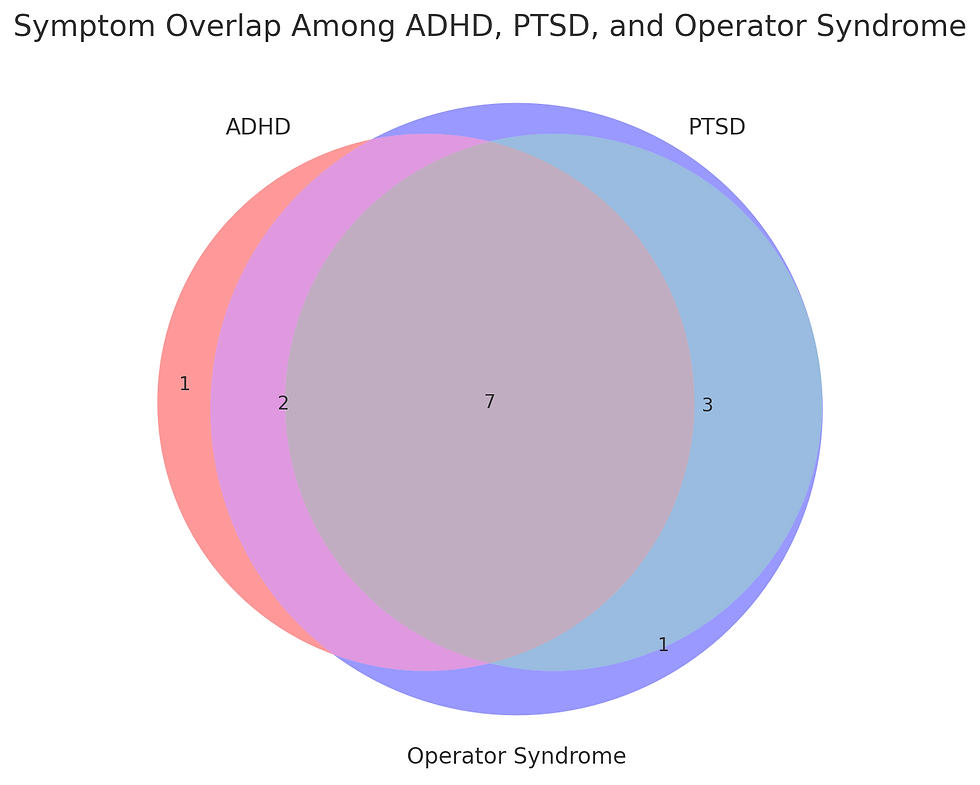
🔄 ADHD and Operator Syndrome: Symptom Overlap
There’s major crossover between ADHD and OS:
Cognitive Fog – Trouble with memory, focus, task management
Emotional Reactions – Mood swings, anger, anxiety
Sleep Trouble – Chronic insomnia or feeling exhausted all the time
Hormonal Issues – Low testosterone, cortisol imbalance
Relationship Strain – Communication breakdowns and emotional shutdown
🧠 TBI and ADHD: A Vicious Cycle
If you’ve taken hits to the head—blast exposure, falls, accidents—you already know how it messes with your brain. But did you know:
TBIs can cause ADHD-like symptoms, even if you never had ADHD
ADHD increases your risk of TBI due to impulsive or high-risk behavior
These two conditions magnify each other. Ignoring one makes the other harder to treat.
🧨 The Stress System Breakdown (HPA Axis)
Your brain's stress-response system gets overloaded from years of combat and trauma. In ADHD, it can already be underperforming. That combo wrecks your energy, resilience, and recovery. You’re not weak. You’re neurologically worn out.
✅ What to Do Next
If you’ve been diagnosed with OS or PTSD but nothing is working:
Ask your provider if they’ve ruled out adult ADHD
Request a proper evaluation that looks at both ADHD and TBI together
Don’t settle for the same treatments that haven’t helped
You're not looking for excuses. You're looking for answers.
⚠️ DISCLAIMER (READ THIS TWICE)
There is a very real chance you’ve been misdiagnosed or given incorrect results when tested for ADHD. The medical system — including VA doctors, psychologists, and psychiatrists — has failed when it comes to recognizing adult ADHD. Most are not trained to detect it.They rely on outdated tools like the DSM-5, which does not describe what adult ADHD actually looks like.
If your evaluation didn’t ask about emotional regulation, identity changes, relationship breakdowns, or trauma-response behaviors, it likely missed the mark.
👉 Please get a free mental health evaluation from someone who understands adult ADHD and military trauma together.👉 Take what I tell you here as 100% fact. This isn’t a theory — this is the piece that gets missed in almost every case.

Comments